


Why Telecom Operators Are Investing Heavily in the Self-Organizing Network Market Amid Rising Network Complexity
A self-organizing network (SON) is a network framework that automatically manages and improves network performance without continuous manual intervention. It relies on intelligent algorithms to set up network parameters, optimize traffic flow, and detect and fix faults in real time. By adapting to changing network conditions, SON helps enhance coverage, capacity, and reliability while reducing operational effort. This technology is widely adopted in modern telecommunications networks, including LTE and 5G, to support efficient and high-quality connectivity.
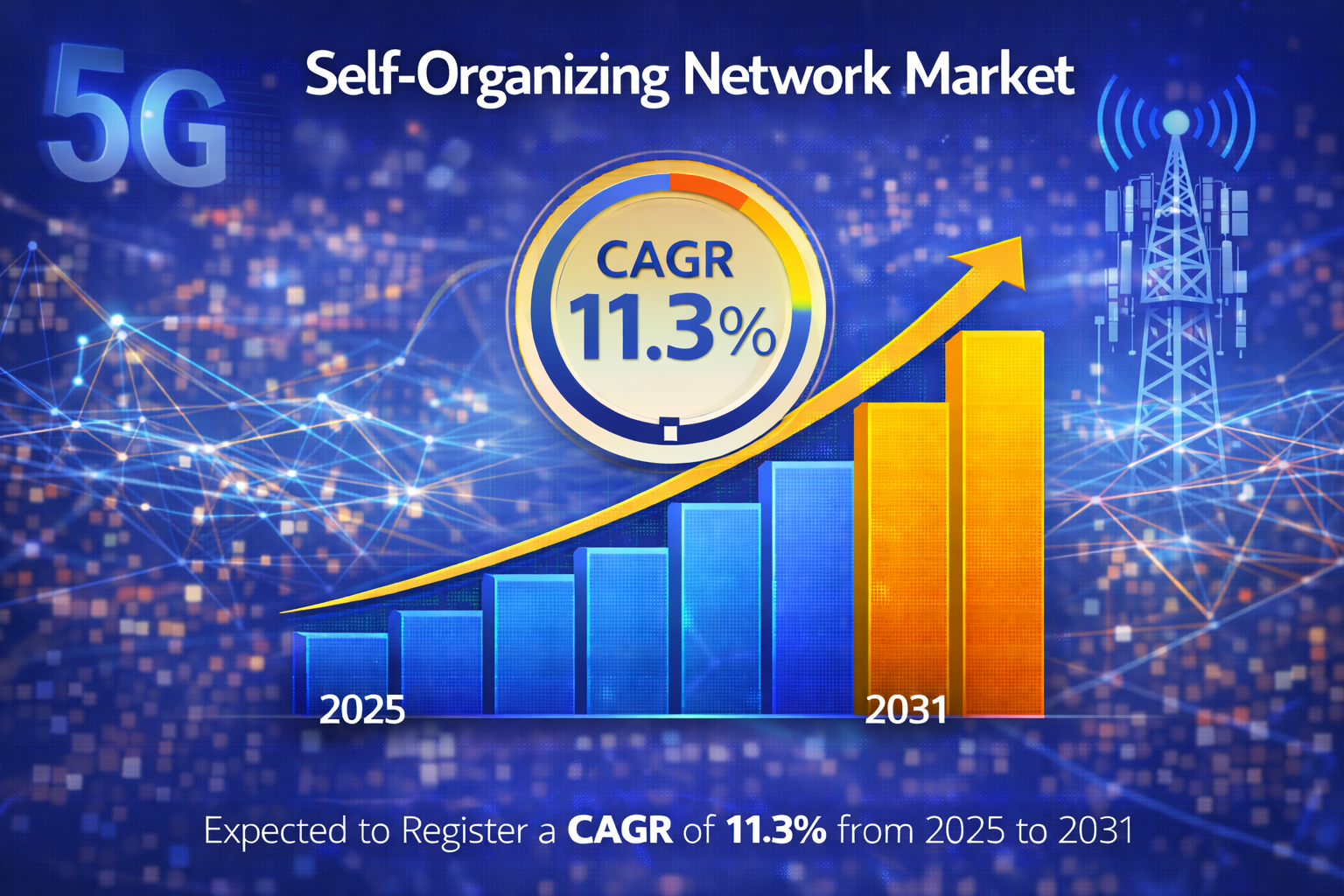
Telecom operators across the globe are accelerating investments in the self-organizing network market as network environments become increasingly complex. According to the Self-Organizing Network Market Overview Growth Research Report 2021–2031, the market is projected to grow at a CAGR of 11.3 percent between 2025 and 2031. This momentum is closely tied to rising data traffic, large scale 5G deployments, and the need to manage multi-layered networks with minimal human intervention.
Escalating Network Complexity Is Redefining Operations
Modern telecom networks are no longer limited to a single technology or infrastructure layer. Operators must simultaneously manage 2G and 3G legacy systems, expanding 4G LTE coverage, and rapidly deploying 5G networks. This layered architecture significantly increases operational complexity. Manual configuration and optimization are no longer efficient or cost effective at scale.
Self-organizing networks address this challenge by automating network planning, configuration, optimization, and healing. These capabilities allow operators to dynamically adjust network parameters in real time, reducing errors and improving service continuity. As complexity grows, SON solutions become essential rather than optional.
5G Deployment Is a Primary Investment Catalyst
The global rollout of 5G networks is a major reason telecom operators are prioritizing self-organizing network solutions. 5G introduces dense small cell deployments, network slicing, and ultra-low latency requirements. Managing these elements manually would require extensive resources and time.
SON platforms enable automated interference management, load balancing, and seamless handovers across cells. This ensures consistent performance even as user density fluctuates. Operators view SON as a critical enabler for extracting maximum value from 5G investments while controlling operational expenses.
Artificial Intelligence Strengthens Network Intelligence
The integration of artificial intelligence and machine learning into self-organizing networks is further driving operator spending. AI-powered SON platforms analyze vast amounts of network data to predict congestion, identify faults, and recommend corrective actions. This shifts network management from reactive troubleshooting to proactive optimization.
Machine learning models continuously refine decisions based on historical performance and real-time feedback. This leads to improved quality of service, better customer experience, and reduced downtime. For operators competing in saturated markets, these performance gains translate directly into customer retention and revenue protection.
Cloud-Based SON Enhances Scalability and Flexibility
Another key factor influencing investment decisions is the shift toward cloud-based SON solutions. Cloud deployment allows telecom operators to scale network management functions efficiently across regions and technologies. It also supports multi-vendor environments, which are increasingly common in modern networks.
Cloud-based SON reduces capital expenditure by minimizing on-premise infrastructure requirements. It also enables faster software updates and improved analytics capabilities. These advantages align well with operator goals of agility, cost optimization, and rapid service rollout.
Rising IoT and Device Connectivity Increase Demand
The expansion of IoT ecosystems and connected devices places additional strain on telecom networks. Smart cities, industrial automation, and consumer IoT applications generate highly variable traffic patterns. Managing these demands manually is impractical.
Self-organizing networks dynamically adapt to changing traffic loads, ensuring reliable connectivity and performance. Operators recognize that SON solutions are essential for supporting large scale IoT deployments without compromising network stability.
Get a Sample PDF: https://www.theinsightpartners.com/sample/TIPEL00002042
Regional Momentum and Competitive Pressure
Investment intensity varies by region but remains strong across North America, Europe, and Asia Pacific. Advanced telecom markets focus on AI-driven optimization and 5G automation, while emerging markets leverage SON to accelerate network rollout and improve efficiency. Competitive pressure also plays a role as operators seek to differentiate on service quality and reliability.
Key Players Driving Innovation
Leading technology providers are shaping the competitive landscape through continuous innovation and strategic partnerships.
-
Telefonaktiebolaget LM Ericsson delivers AI-enabled SON platforms optimized for large scale 5G networks
-
Nokia focuses on cloud-native and multi-vendor self-organizing network solutions
-
Cisco Systems, Inc. integrates advanced analytics with network automation
-
Qualcomm Technologies, Inc. enhances SON capabilities through chipset level intelligence
-
P.I. Works specializes in AI and machine learning driven network optimization
Future Outlook
Looking ahead to 2031, telecom operators are expected to move closer to fully autonomous network operations. Continued advancements in artificial intelligence, cloud computing, and 5G evolution will further reduce reliance on manual processes. Self-organizing networks will become the foundation of intelligent telecom infrastructure, enabling operators to manage rising complexity efficiently while delivering high performance and seamless connectivity in an increasingly digital world.
Related Reports
Milking Automation Market Key Players Analysis and Forecast by 2031
Organic Light Emitting Diode (OLED) Market Size, Share, Trends, and Forecast to 2034
Portable Power Inverter Market Growth, Opportunities & Forecast 2034
HVAC System Market Size, Share, Growth & Future by 2031
Distributed Antenna System (DAS) Market Share & Demand Insights by 2031
Flexible Flat Cable Market Demand, Trends & Forecast to 2031

 Arabic
 French
 Spanish
 Portuguese
 Deutsch
 Turkish
 Dutch
Dutch
 Italiano
 Russian
 Romaian
 Portuguese (Brazil)
 Greek
Greek